


How Do You Choose the Right Fence System for Horses? Finding the right containment system requires balancing safety, visibility, and structural durability. The best system prevents injuries by absorbing impacts and maintaining a high profile that horses can see clearly, which is why horse fence systems are designed around the specific safety needs of equine properties.
Justice Fence Co has spent years designing and installing durable boundaries for agricultural properties in Battle Creek, Michigan. In this guide, we will provide you with the critical facts, research, and practical advice needed to select a secure barrier for your animals, drawing on our experience with fencing projects of all types.
1 Safety considerations for equine fencing
Safety must be your primary focus when selecting an equine barrier. Horses are active, easily startled animals with thin skin, making them prone to severe lacerations and impact injuries.
A survey by the Virginia Tech Extension shows that 27 percent of horse owners reported fence-related injuries within a single year. Of those injuries, wire systems such as barbed wire, high-tensile wire, and welded wire accounted for 63 percent of the total incidents. Conversely, diamond mesh wire had a mere 6 percent injury rate, with all reported injuries being minor.
When assessing safety, you must evaluate three key properties of your barrier material. First, it must be highly visible so horses can see it while running. Second, it needs enough physical strength to contain a heavy animal. Third, it should offer enough flexibility to absorb impact without splintering or causing cuts—considerations that make wood fence systems a practical option for properties prioritizing both visibility and structural containment.
Bonus Tip: To prevent head and neck injuries, ensure that any wire opening on your pasture barrier is smaller than 3 inches by 3 inches. This small spacing keeps hooves from getting caught.
2 Top materials for horse containment
Each fencing material offers distinct advantages and disadvantages depending on your budget, acreage, and management needs. Selecting the right option requires evaluating long-term maintenance alongside initial installation costs.
The table below outlines how common equine fencing materials perform across key safety and durability categories.
Performance metrics for common horse fencing materials
| Material Type | Visibility | Maintenance Level | Expected Lifespan in Years | Relative Cost |
|---|---|---|---|---|
| Solid Wood Boards | High | High | 10 to 15 | Medium to High |
| Rigid Vinyl Rails | High | Low | 20 to 30 | High |
| 2×4 No-Climb Mesh | Medium | Low | 15 to 25 | Medium |
| Electric Poly-Tape | High | Medium | 5 to 10 | Low |
Wooden board boundaries
Traditional wood board fences remain highly popular because they are highly visible and sturdy. Justice Fence Co recommends using wood or composite rails for small paddocks where horses gather frequently.
Wood absorbs impact reasonably well but can splinter when broken, posing a risk of puncture wounds. Wood also requires ongoing painting, staining, and replacement of weathered or chewed boards.
Rigid vinyl and composite rails
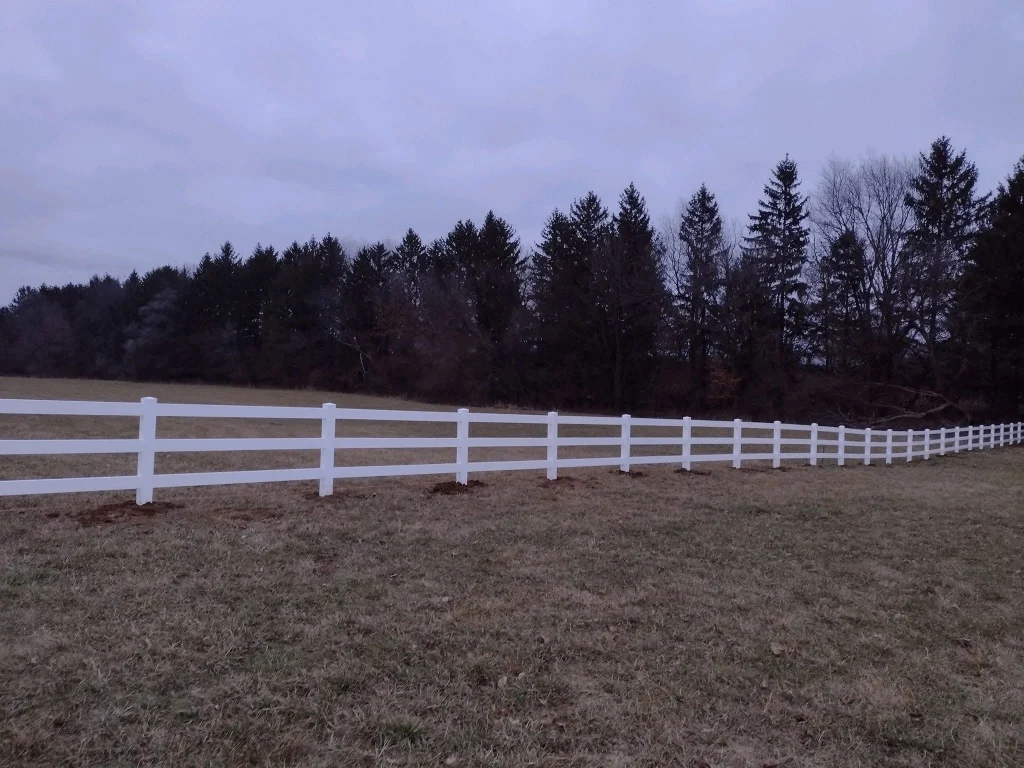
Vinyl rails offer the classic look of painted wood without the endless maintenance chores. High-quality vinyl does not rot, peel, or require painting, making it a clean and long-lasting alternative.
However, vinyl lacks the physical strength of solid wood. Under heavy impact, vinyl rails can break or shatter, occasionally leaving sharp edges. Adding an electric wire alongside vinyl can prevent horses from leaning or rubbing against it.
High-tensile woven wire mesh
Woven wire with a 2-inch-by-4-inch mesh pattern is widely considered one of the safest options available. The openings are too small for a horse to step through, preventing dangerous hoof entrapment.
To make this system effective, you must install a solid wood top rail. A wooden top rail provides the necessary visibility so horses do not collide with the mesh at high speeds.
Bonus Tip: If you choose wood or vinyl rails, always install the boards on the inside of the posts. This placement prevents horses from popping the boards off when leaning against the fence.
Electric poly-tape and wire
Electric fencing serves as an excellent psychological barrier rather than a physical one. Wide poly-tape is highly visible and teaches horses to respect the boundary through a safe, mild shock.
Electric systems are cost-effective and easy to install for temporary grazing areas. However, they require frequent monitoring to ensure the power source remains active and vegetation does not short out the wires.
What is the most effective containment design for your herd
The best design depends heavily on your specific herd dynamics, pasture size, and animal age. Stallions, mares with foals, and groups of young geldings all interact with boundaries differently.
Guidance from the University of Minnesota Extension suggests that horse paddocks under heavy use, such as dry lots, must be at least 4.5 feet high, while stallion pens should be 6 feet high. High boundaries prevent horses from fighting over the top or attempting to jump out.
If you have multiple pastures, you must plan for wide lanes between them. Double-fencing with a lane of 12 feet or more prevents horses in neighboring pastures from biting, kicking, or playing across the barrier.
3 Installation standards for horse pastures
Proper installation is just as important as choosing the right material. A poorly installed system will sag, lean, or fail under pressure, creating safety hazards for your animals.
Always set your fence posts deep into the ground, especially at corners and gate areas. Corner posts must be braced properly to withstand the tension of wire mesh or the weight of heavy wooden gates.
To prevent pasture injuries, avoid building sharp 90-degree corners. Instead, construct your pastures with rounded or diagonal corners. This design prevents dominant horses from trapping subordinate herd members at tight angles.
Properly grounding your electrical elements is another standard requirement. According to research from the University of Georgia Extension, an electric system requires a dedicated grounding system located at least 50 feet away from other utilities to function reliably.
Important factors to evaluate before your purchase
Before you purchase materials or begin digging, you must analyze several environmental and logistical factors. This preparation saves you from costly adjustments during the build.
First, study your property’s terrain and soil characteristics. Rocky or hard soils require specialized post-driving equipment, while wet, marshy soils demand deeper post placement with concrete stabilization.
Second, consider local zoning rules, property boundaries, and utility easements. In Battle Creek, Michigan, you must check local setback rules and call utility locator services before placing any posts near property borders.
Finally, think about your daily chore routes. Position your gates near your barn, water sources, and feed storage areas. Ensure your gates are wide enough to accommodate mowing equipment, tractors, and emergency vehicles.
Final advice on choosing your horse fence
Selecting the right equine boundary requires a balanced look at safety, strength, and maintenance. By focusing on high visibility and secure physical barriers, you can prevent pasture accidents and protect your investment. Take time to evaluate your herd size, pasture layouts, and local soil conditions before making your final selection.
Secure your pasture with our expert installation services
Justice Fence Co is ready to help you build a safe, reliable, and durable containment system for your horses in Battle Creek, Michigan. We design and install high-quality, customized barriers that fit your agricultural needs and keep your animals protected. Reach our friendly office directly by calling (269) 964-1596 to receive your free quote. Let us assist you with professional advice and expert fence installation today.
Frequently Asked Questions
What is the safest height for a horse fence?
The safest height for a perimeter horse fence is at least 5 feet, which prevents horses from attempting to jump over and escape.
Can I use barbed wire for horse fencing?
No, barbed wire should be avoided because its sharp barbs cause severe lacerations and major injuries when horses run into or kick the fence.
How far apart should fence posts be spaced?
For wooden rail systems, space the posts 8 to 10 feet apart, while high-tensile wire posts can be spaced up to 12 feet apart.
Is electric fencing safe for horses?
Yes, wide electric poly-tape is safe and highly visible, acting as an excellent psychological barrier when combined with a physical fence.
What is the best fence for small paddocks?
Small paddocks require high visibility and strength, making wood rails or woven wire with a solid top rail the best choices.
Sources
- Virginia Tech Extension – Virginia Cooperative Extension research on equine fence safety statistics and owner surveys.
- University of Minnesota Extension – Agricultural extension guidelines for horse paddock dimensions and safety management.
- University of Georgia Extension – Cooperative Extension bulletins detailing proper grounding and installation methods for agricultural wire fences.