
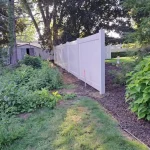


The average vinyl fence cost per foot for professional installation typically ranges between $28 and $58 per linear foot. Most homeowners pay about $35 to $45 per foot for a standard 6-foot privacy fence, including labor and basic materials. Projects with decorative elements, difficult terrain, or high-grade commercial panels can climb to $65 per foot or higher.
This guide breaks down every expense associated with vinyl fencing projects, including material grades, labor rates, and unexpected site conditions. Years of hands-on fence building and field measurements by Justice Fence Co. provide the operational context behind these numbers, helping property owners plan budgets accurately. Explore our residential and commercial vinyl fencing options to understand how different property requirements can affect project planning.
Nationwide Pricing Breakdown for Vinyl Fencing
Total project expenses are split into two main buckets: raw materials and field labor. Material expenses usually make up roughly 60% of the total, while professional labor accounts for the remaining 40%.
According to cost tracking compiled by Angi, the nationwide average for a full residential vinyl fence installation sits near $4,100, with most standard backyards falling between $2,200 and $6,100. Understanding the specific cost of vinyl fence per foot helps you calculate accurate numbers based on your exact boundary lines rather than general property averages.
| Fence Style | Height | Average Materials Per Foot | Average Labor Per Foot | Total Cost Per Linear Foot |
|---|---|---|---|---|
| 2-Rail Ranch Rail | 3 to 4 feet | $12 – $18 | $8 – $12 | $20 – $30 |
| Picket Fence | 4 feet | $15 – $24 | $10 – $16 | $25 – $40 |
| Semi-Privacy | 5 to 6 feet | $18 – $28 | $12 – $18 | $30 – $46 |
| Full Privacy | 6 feet | $22 – $36 | $14 – $22 | $36 – $58 |
| Decorative / Wood-Grain Privacy | 6 to 8 feet | $30 – $48 | $16 – $26 | $46 – $74 |
Style choices carry immediate budget impacts. Picket and post-and-rail setups use significantly less PVC resin than full-panel tongue-and-groove boards, keeping the vinyl fence price per foot on the lower end of the pricing spectrum.
Core Variables Influencing Your Final Quote
While square footage sets the baseline, site details and product specs quickly adjust real-world installation estimates.
Height and Panel Thickness
A 4-foot fence requires shorter posts and shallower post holes than a 6-foot or 8-foot privacy wall. Deeper holes demand more concrete and physical labor, especially in areas with deep frost lines. Beyond height, panel wall thickness dictates durability. Cheap panels often have wall thicknesses below 0.013 inches, whereas professional-grade vinyl ranges from 0.015 to 0.025 inches. Thicker materials resist wind stress and impact damage far better, though they increase raw purchase costs.
Post Anchoring and Soil Conditions
Setting posts properly prevents fence lines from sagging or shifting over time. Clay, rocky soil, or ground dense with tree roots slows down mechanical augers, requiring manual digging or specialized hydraulic machinery. These obstacles increase total crew hours on site.
Bonus Tip: Always verify that your installer sets posts below the local frost line rather than using surface drive anchors. In northern climates, post holes must reach 36 to 48 inches deep to avoid winter frost heave.
Color and Texture Finishes
Standard bright white vinyl remains the most budget-friendly selection due to mass production efficiency. Earth tones like tan, clay, and gray typically add 10% to 20% to your vinyl fencing cost per foot. Vinyl fencing options include premium finishes featuring embossed wood textures or multi-tone patterns, which can raise material costs by up to 35% because they require specialized UV inhibitors and manufacturing processes.
Site Challenges That Add to Installation Expenses
Estimates assume a clear, level perimeter with straightforward access. When job sites present real-world obstacles, professional labor charges adjust to reflect the added time.
Contractor survey data published by Bob Vila indicates that typical labor rates for fence installation run between $35 and $80 per hour per worker, depending heavily on site accessibility and regional living costs.
Slopes and Grading
Steep yards require one of two construction techniques: racking or stepping. Racked fences follow the natural slope of the ground, leaving no gaps at the bottom. Stepped fences drop each panel down like a staircase, requiring longer posts and custom post-routing. Both techniques require additional panel modification in the field, raising the overall vinyl fence installation cost per foot.
Tree Clearing and Existing Fence Removal
Tearing out an old wooden, chain-link, or deteriorated vinyl fence usually costs between $3 and $7 per linear foot. This charge generally covers teardown, post extraction, concrete haul-away, and local landfill disposal fees.
Bonus Tip: Clear shrubs, low branches, and yard debris along a 3-foot strip on both sides of the fence line before the installation crew arrives. Prepping this space yourself cuts billable prep hours from your final invoice.
Things to Consider Before Making a Decision
Before signing a contract or purchasing materials, review these practical property items to prevent costly legal or physical mistakes.
- Property Line Surveys: Avoid relying on visual markers or neighbor agreements. Pinpoint exact boundary pins through an official survey. Building even two inches onto an adjacent parcel can force you to dismantle the entire fence at your own expense.
- Local Zoning and HOA Guidelines: Municipal rules often limit front-yard fences to 4 feet and backyard fences to 6 feet. Many homeowner associations also dictate allowable vinyl colors, rail designs, and gate placements.
- Underground Utility Markings: Always dial 811 before any digging starts. Hitting buried gas, water, or electric lines leads to safety risks and heavy municipal fines.
- Wind Load Requirements: Open flatlands or coastal regions demand heavy-duty internal post stiffeners made of aluminum or galvanized steel, which prevent panels from popping out during severe storms.

Common Questions About Vinyl Fence Longevity and Care
Property owners often weigh vinyl against cedar, pressure-treated pine, or aluminum. Vinyl demands a higher upfront investment than treated pine, but it removes ongoing maintenance expenses like staining, painting, or pest treatments.
Standard vinyl fencing lasts between 20 and 30 years with minimal intervention. Occasional washing with a garden hose, mild soap, and a soft brush removes dirt, pollen, and algae. High-grade vinyl contains titanium dioxide, a compound that prevents yellowing and brittle breakdown caused by sun exposure.
Summary of Project Realities
Choosing a vinyl fence requires balancing upfront investment against decades of low maintenance. Factor in panel style, proper footing depth, gate hardware, and site grading to calculate your actual cost per linear foot accurately. Take time to survey boundaries, consult local building codes, and review detailed contractor quotes before starting your installation.
Work with an Experienced Fencing Professional
Justice Fence Co. delivers clear project quotes, solid materials, and precise installation work for homeowners looking to secure their boundaries. Direct your questions to our team by email at sales@justicefence.com or reach out by calling (269) 964-1596 to discuss project details, review style catalogs, and schedule your property measurement.
Questions People Often Ask
How long does a professional crew take to install 150 feet of vinyl fence?
A qualified crew of two or three installers typically completes 150 linear feet within one to two business days. The first day involves layout, digging holes, and pouring concrete footings. The second day focuses on assembling panels, hanging gates, and securing top caps once the concrete hardens.
Do vinyl fence posts need concrete around every post?
Yes. Unlike lightweight agricultural barriers, privacy vinyl panels catch heavy winds like sails. Securing every post in concrete footings prevents shifting, leaning, and blowouts during seasonal storms.
Are gates included in the per-foot installation estimate?
No. Standard walk gates and double-drive gates carry separate fees due to structural hardware, heavy-duty hinges, latches, and internal metal gate frames. Walk gates typically cost $300 to $600 installed, while double driveway gates range from $700 to $1,400.
Can vinyl fencing be installed during the winter?
Yes, provided the ground is not frozen solid past digging depth. Installers use heavy-duty hydraulic augers to cut through surface frost. Vinyl panels become more brittle in cold temperatures, so installers must handle and cut boards carefully to prevent cracking.